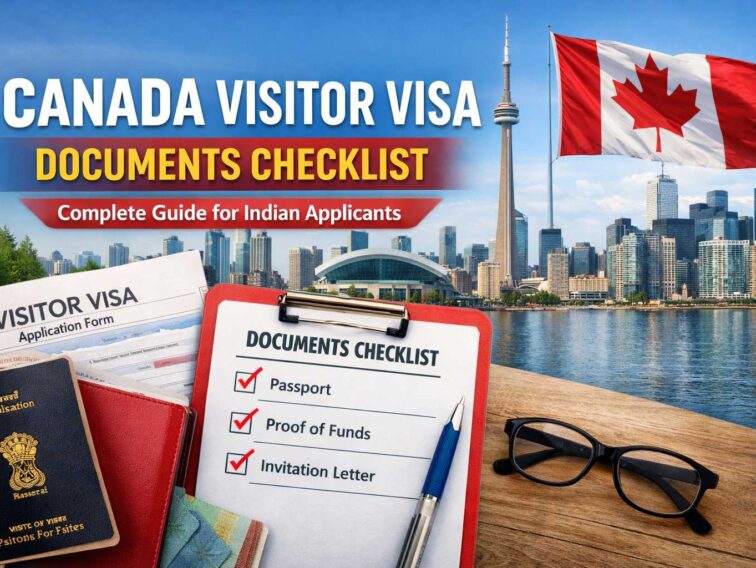
Applying for a Canada visitor visa can feel confusing, especially when different websites give different document lists. One missing or unclear document can easily lead to delays or refusal.
In this guide, I’ll walk you through the exact documents required for a Canada visitor visa (tourist visa) in 2026, explained in plain language and based on official IRCC requirements and real application experience — with a special focus on Indian applicants.
What Is a Canada Visitor Visa?
A Canada visitor visa, also called a Temporary Resident Visa (TRV), allows foreign nationals to visit Canada for:
- Tourism
- Visiting family or friends
- Short-term personal or business trips
It does not allow work or long-term study.
Mandatory Documents for Canada Visitor Visa
These documents are required for every applicant, regardless of age or nationality.
1. Valid Passport
- Must be valid for the entire duration of your stay
- At least one blank page required
- Include copies of:
- First and last pages
- Any previous visas or stamps
💡 Tip: A longer passport validity helps officers issue longer visas.
2. Canada Visitor Visa Application Form
- Form IMM 5257 (Visitor Visa Application)
- Completed and submitted online through IRCC
Make sure all answers match your supporting documents.
3. Digital Photograph
- Recent photo (not older than 6 months)
- White background
- As per IRCC photo specifications
4. Proof of Funds (Very Important)
You must show you can financially support yourself in Canada.
Acceptable documents include:
- Bank statements (last 6 months)
- Salary slips (last 3–6 months)
- Income tax returns (ITR)
- Fixed deposits or savings certificates
There is no fixed amount, but clarity and consistency matter.
5. Purpose of Travel Documents
These explain why you are visiting Canada.
Examples:
- Travel itinerary
- Hotel bookings
- Invitation letter from family or friends
- Cover letter explaining travel plans
A well-written cover letter can significantly improve approval chances.
Supporting Documents (Strongly Recommended)
These documents are not always mandatory but greatly strengthen your application.
6. Proof of Ties to Home Country
This shows IRCC that you will return after your visit.
Documents may include:
- Employment letter or job contract
- Leave approval letter
- Business registration (if self-employed)
- Property documents
- Family ties in India
7. Employment or Business Proof
Depending on your status:
For salaried applicants:
- Job letter
- Salary slips
- Company ID
For self-employed applicants:
- Business registration
- GST certificate
- Business bank statements
8. Invitation Letter (If Visiting Someone)
If visiting friends or relatives in Canada:
- Invitation letter from the host
- Host’s PR card / citizenship proof
- Proof of host’s address
- Host’s bank statements (optional but helpful)
9. Travel History (If Any)
- Copies of previous visas (US, UK, Schengen, etc.)
- Entry/exit stamps
Good travel history increases credibility.
Documents for Special Categories
For Students Visiting Canada
- Student ID card
- Bonafide certificate
- Fee receipts
For Retired Applicants
- Pension documents
- Retirement proof
- Savings or investment details
For Minors
- Birth certificate
- Parents’ passports
- Consent letter from parents
Biometrics Requirement
Most applicants must give biometrics:
- Fingerprints
- Photograph
Biometrics are usually valid for 10 years.
Common Mistakes to Avoid
❌ Submitting fake or unclear documents
❌ Not explaining the purpose of travel
❌ Weak financial proof
❌ Missing proof of return to India
These are top reasons for refusal.
Final Checklist Summary
Before submitting, make sure you have:
✔ Valid passport
✔ Completed application form
✔ Proof of funds
✔ Travel purpose documents
✔ Proof of ties to home country
✔ Supporting documents (employment, invitation, travel history)
Final Thoughts
A Canada visitor visa is not difficult — if your documents are genuine, clear, and well-organized.
Instead of uploading many random documents, focus on:
- Clarity
- Consistency
- Honesty
That’s what IRCC looks for.
Disclaimer
This article is for general informational purposes only and does not constitute legal or immigration advice. Immigration rules and document requirements may change. Always verify details with official Government of Canada sources or consult a licensed immigration professional.